


RECOVERY BEGINS AT NIGHT

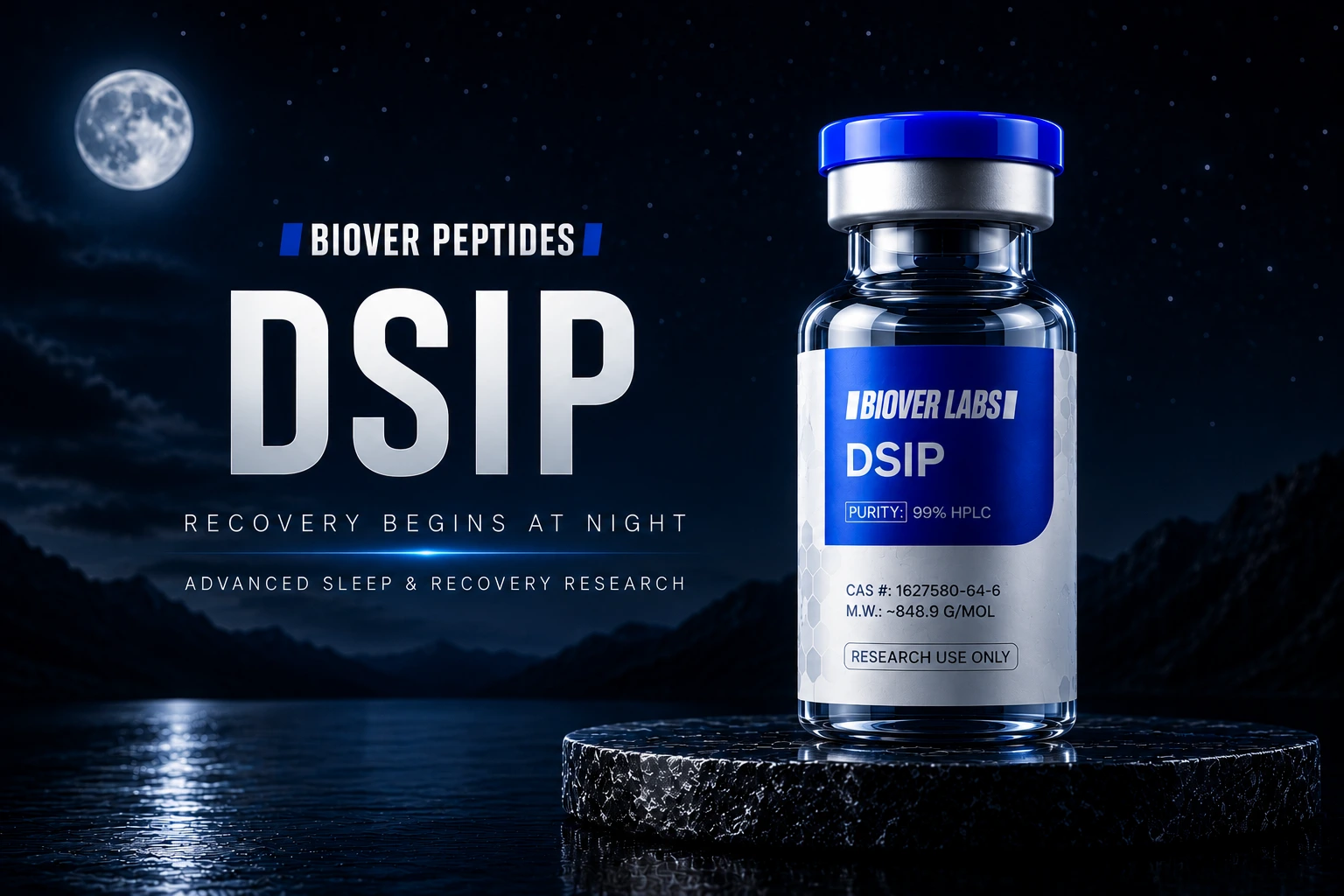
THE SCIENCE OF DEEP RECOVERY
Modern recovery research has evolved far beyond simple rest and relaxation. Today, scientists and peptide researchers are increasingly focused on the biological systems responsible for sleep quality, neurological restoration, hormonal balance, and overnight recovery pathways. Among the compounds gaining attention in this growing field, DSIP — short for Delta Sleep-Inducing Peptide — has become one of the most discussed peptides connected to recovery-focused research environments.
As interest in longevity science, nervous system regulation, and sleep optimization continues expanding, researchers are exploring how specific peptides may interact with the body’s restorative processes during sleep cycles. Recovery is no longer viewed as passive downtime. It is now understood as one of the most biologically active states the human body experiences.
During sleep, countless regenerative functions begin operating simultaneously:
* Hormonal regulation
* Nervous system restoration
* Cellular recovery
* Cognitive reset mechanisms
* Tissue maintenance pathways
* Stress response regulation
The deeper and more efficient these recovery systems operate, the more effectively the body may maintain resilience over time. This growing understanding has led researchers toward compounds associated with recovery biology and sleep-related signaling pathways.
One of the peptides frequently discussed in this area is DSIP.
⸻
What Is DSIP?
DSIP, or Delta Sleep-Inducing Peptide, is a naturally studied neuropeptide associated with sleep regulation and restorative biological processes. Researchers first became interested in DSIP because of its potential relationship with sleep architecture and neuroendocrine signaling pathways.
Over time, scientific investigations expanded into broader areas involving:
* Sleep quality research
* Circadian rhythm studies
* Stress modulation pathways
* Nervous system recovery
* Neuroendocrine signaling
* Recovery-focused biological processes
Unlike stimulatory compounds associated with energy or performance enhancement, DSIP research is often centered around restoration and recovery biology.
This distinction is important.
Modern wellness discussions frequently focus on productivity, energy, and output. However, researchers increasingly recognize that deep recovery may be just as important as performance itself. Without proper restoration, long-term stress accumulation may negatively influence physical resilience, cognitive performance, and overall biological balance.
DSIP research exists within this broader scientific conversation surrounding restoration biology.
⸻
Why Sleep Is More Important Than Ever
In modern lifestyles, sleep disruption has become increasingly common. Constant stimulation, screen exposure, stress, irregular schedules, and environmental pressures may influence natural recovery cycles.
Researchers studying sleep science often point to several consequences associated with poor recovery quality:
* Elevated stress signaling
* Cognitive fatigue
* Reduced recovery capacity
* Hormonal disruption
* Nervous system overload
* Reduced daytime performance
Sleep is not simply a state of unconsciousness. It is one of the body’s primary biological repair windows.
During deep sleep phases, numerous restorative processes become more active. Researchers continue studying how neuropeptides and signaling compounds may influence these systems and support more balanced recovery mechanisms.
DSIP has gained scientific attention largely because of this connection.
⸻
The Relationship Between DSIP and Recovery Research
One reason DSIP remains widely discussed in peptide science is its potential interaction with biological systems connected to restoration and nervous system balance.
Research investigations involving DSIP frequently explore pathways associated with:
* Deep sleep cycles
* Stress response systems
* Circadian regulation
* Recovery signaling
* Neuroendocrine balance
* Nervous system modulation
While many mechanisms are still being studied, DSIP has become associated with broader discussions surrounding recovery optimization and restorative biology.
This makes it especially interesting in modern peptide science, where recovery itself is increasingly viewed as a major pillar of long-term resilience and performance.
⸻
The Nervous System and Modern Stress
Modern stress environments are very different from those experienced historically. Constant notifications, digital overstimulation, work pressure, irregular sleep schedules, and environmental stressors create continuous demands on the nervous system.
Researchers often describe this as a state of chronic nervous system activation.
Over time, prolonged stress exposure may influence:
* Sleep efficiency
* Recovery quality
* Cognitive clarity
* Mood regulation
* Hormonal balance
* Overall resilience
This is one reason recovery-focused compounds continue attracting growing interest in research settings.
Instead of focusing exclusively on stimulation and performance enhancement, many researchers are now investigating how recovery biology may support long-term function and balance.
DSIP fits naturally within this evolving category of recovery-oriented peptide science.
⸻
Circadian Rhythm and Biological Timing
Another major area connected to DSIP research involves circadian rhythm regulation.
Circadian rhythms are internal biological timing systems that help regulate:
* Sleep and wake cycles
* Hormonal release
* Recovery phases
* Nervous system patterns
* Cognitive performance fluctuations
Disruptions in circadian rhythm may affect multiple biological systems simultaneously.
Modern lifestyles frequently interfere with natural circadian processes through:
* Late-night screen exposure
* Artificial lighting
* Irregular sleep schedules
* Shift work
* Travel-related disruption
* Chronic stress
Researchers studying recovery biology increasingly recognize the importance of maintaining balanced circadian function for overall health and resilience.
Compounds associated with recovery and sleep regulation therefore remain an active area of scientific interest.
⸻
Recovery Is Becoming a Performance Metric
For years, recovery was often overlooked in discussions surrounding performance and longevity. However, modern research increasingly views recovery capacity as a measurable component of long-term biological resilience.
High-level athletes, longevity researchers, and recovery specialists now place enormous emphasis on:
* Sleep quality
* Nervous system recovery
* Stress management
* Overnight restoration
* Cognitive recovery
* Recovery efficiency
This shift has created growing interest in compounds connected to sleep and recovery science.
Rather than chasing constant stimulation, many researchers now focus on optimizing the body’s ability to recover efficiently between periods of stress and output.
⸻
Why Recovery Science Matters for Longevity Research
Longevity research is no longer focused solely on lifespan. Increasingly, researchers are investigating healthspan — the quality of biological function maintained over time.
Recovery plays a major role in this discussion.
Insufficient recovery may influence multiple systems connected to aging and resilience, including:
* Nervous system balance
* Hormonal stability
* Cognitive function
* Stress adaptation
* Cellular repair pathways
Researchers studying regenerative biology often emphasize that recovery is not optional for long-term resilience. It is foundational.
This is one reason recovery-related peptides continue attracting scientific attention within broader longevity discussions.
⸻
Precision Matters in Peptide Research
As peptide science grows, quality standards have become increasingly important in research environments.
Researchers often prioritize compounds produced under strict manufacturing conditions with emphasis on:
* High purity standards
* Consistency between batches
* Independent verification
* Precision formulation
* Research-grade handling protocols
Because peptide-related investigations depend heavily on accuracy and consistency, maintaining reliable standards remains essential across scientific environments.
This has become especially important as peptide science expands globally and interest in recovery-related compounds continues increasing.
⸻
The Future of Recovery Research
The future of recovery science will likely become far more advanced and biologically informed than traditional approaches to sleep and restoration.
Researchers continue exploring how signaling compounds may interact with systems connected to:
* Deep sleep architecture
* Nervous system regulation
* Stress adaptation pathways
* Neuroendocrine signaling
* Circadian biology
* Overnight restoration processes
As the scientific understanding of recovery expands, peptides associated with restorative biology may become an increasingly important part of broader regenerative research discussions.
DSIP remains one of the most recognized names in this category because it represents a growing shift toward understanding recovery not as passive rest, but as an active biological process deeply connected to resilience, performance, and long-term health.
⸻
Final Thoughts
The science of deep recovery is evolving rapidly. Modern research increasingly recognizes that recovery quality may influence nearly every aspect of biological performance, resilience, and long-term function.
DSIP has become a widely discussed compound in peptide-related recovery science because of its connection to sleep regulation, nervous system balance, and restorative biological pathways. As researchers continue exploring the biology of recovery, interest in compounds associated with sleep-focused signaling systems will likely continue growing.
In many ways, the future of performance may depend less on constant stimulation and more on how effectively the body restores itself overnight.
Because ultimately, recovery truly begins at night
Available in our store

Bpc-157 10mg

Cjc-1295 Dac 10mg
$89.95
DSIP 10mg

Epithalon 10mg
$69.95
Ghk-cu 100mg


